I love a good family road trip.
There’s something about being able to connect multiple destinations, stop in places you might otherwise never visit, and make the journey just as much a part of the vacation as the destination itself.
But I’ve also learned that there’s a fine line between an amazing family road trip and one where everyone is exhausted, cranky, and completely over being in the car.
After planning quite a few road trips for our family, I’ve developed a process that helps me figure out how much we can realistically see, where we should stay, how long we should drive, and, most importantly, how to build a trip that our entire family will actually enjoy.
And surprisingly, I don't start by booking anything.
I start with a map.
1. Start With a Map, Not Bookings
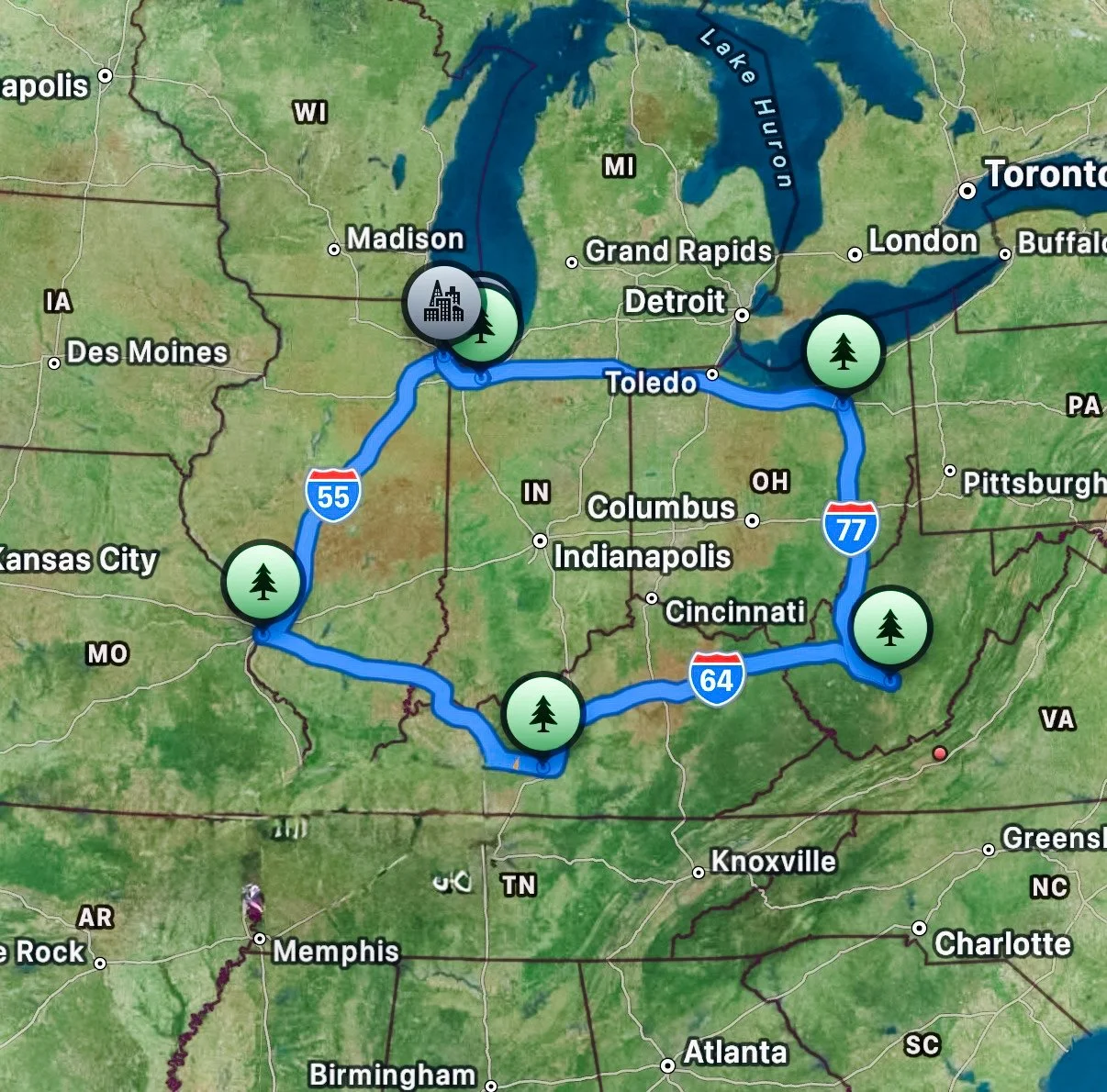
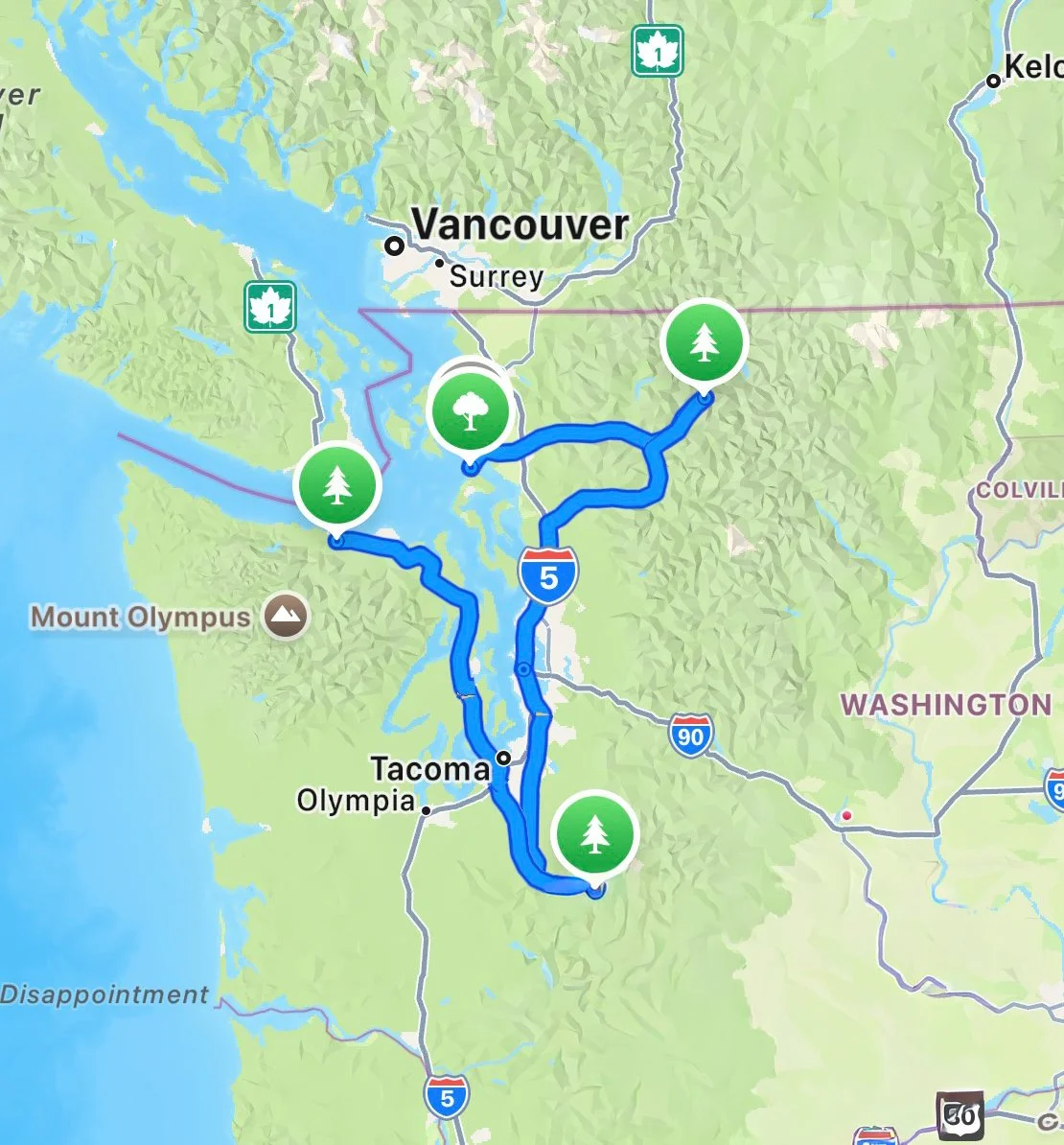
Before I look at hotels or start making reservations, I pull up a map.
My first question is simply: Where do we want to explore?
Then I start thinking about what I call the shape of the trip.
Are we making a loop? Are we starting in one place and ending somewhere completely different? Are there several national parks we want to connect? Is there one main destination with smaller stops along the way?
At this point, I'm not worried about where we're sleeping each night. I just want to see what the trip could look like geographically. I've found that if I start booking hotels too early, I can accidentally lock us into a route before I've really thought through whether it makes sense.
The map comes first. The bookings come much later.
2. Look at How Much Time We Really Have
Once I have a general idea of where we want to go, I look at our calendar.
How many days do we actually have? More specifically, how many are full exploring days versus travel days?
If we have seven days for a road trip, that doesn't necessarily mean we have seven days to explore. We may need a full day to get there, another day to get home, or several half-days that will be spent driving between destinations.
I also think about how often we're willing to change hotels. There is a big difference between spending seven nights in two hotels and spending seven nights in six hotels. Sometimes we're willing to move almost every night because we want to cover a lot of ground. Other times, we know we're going to want a home base for a couple of days.
Knowing that before I start building the itinerary makes a huge difference.
3. Check the Logistics Early
Now I start looking at all the not-so-exciting details that can completely derail a road trip if you don't check them ahead of time.
I look at school holidays, work schedules, driving distances, and how much time we'll realistically need to get from one destination to another. Then I start checking the places we already know we want to visit.
What time do they open?
What time do they close?
Are there certain days they're closed?
Do we need reservations?
Are there specific tours or activities that only happen at certain times?
I also start thinking about what time we would ideally arrive somewhere and when we would need to leave for the next destination. This is where a road trip starts becoming less of an idea and more of an actual possibility. Because something might look perfect on a map until you realize the attraction you planned your entire Tuesday around is closed on Tuesdays.

4. Create a Giant Road Trip Brain Dump
This is my favorite part of the entire planning process. I open a document and start dumping everything into it. And I mean everything!
Instagram posts I've saved. Pinterest ideas. National parks. Scenic overlooks. Historic sites. Cute little towns. Unique roadside stops. Restaurants. Hikes. Museums. Places the kids might enjoy. Random things I find while researching.
At this stage, I'm not trying to figure out whether we can actually do all of it. I'm just collecting ideas.
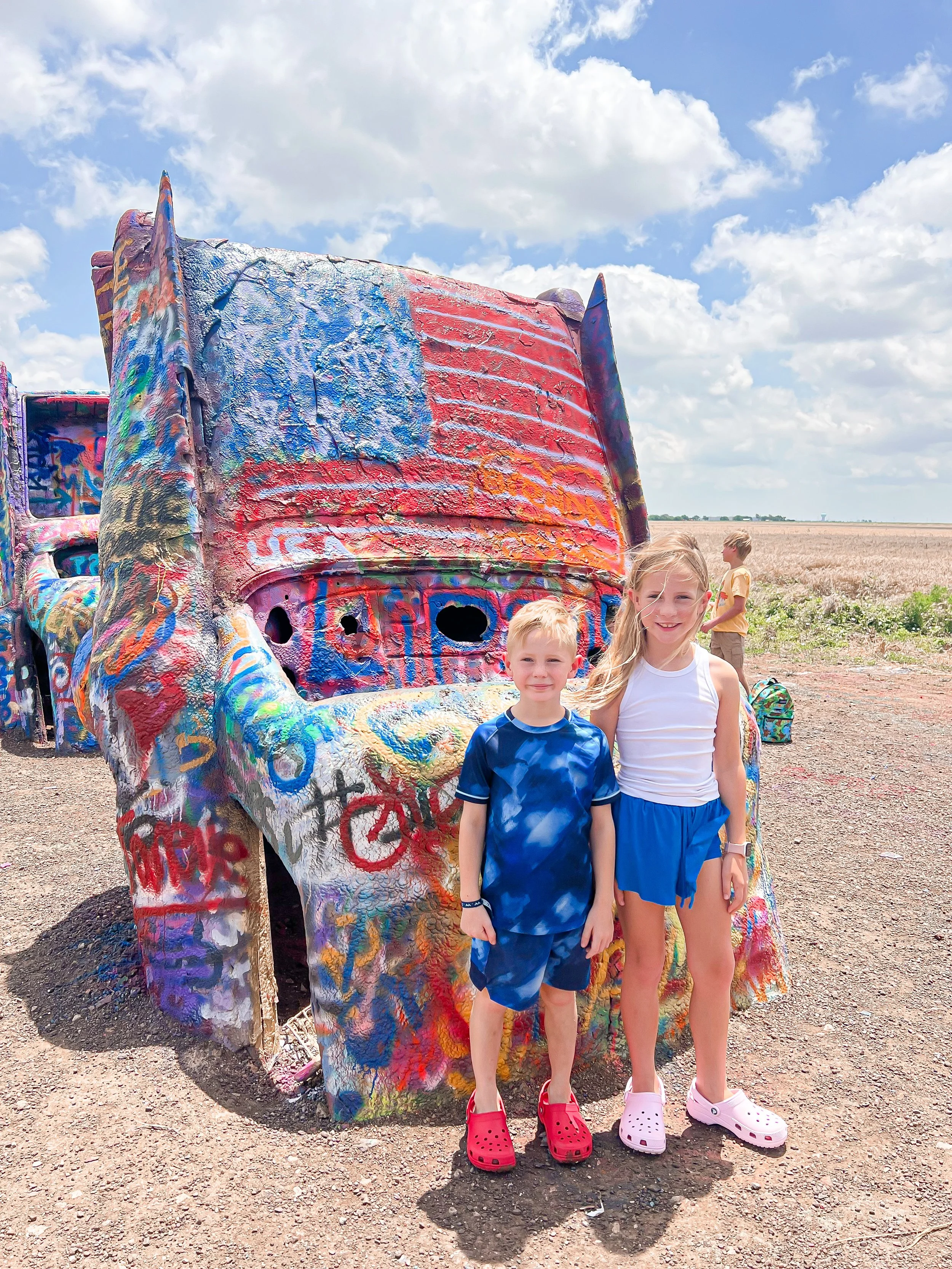
I especially love looking for interesting stops between our major destinations. If we're going to be driving for several hours anyway, is there a cute town we could stop in? A scenic overlook? A historic site? A weird roadside attraction?
Those smaller stops can turn what would have been a long driving day into part of the adventure.
And honestly, this is where the fun of planning happens for me.
Nothing is set in stone yet. I'm just figuring out all the possibilities.
5. Decide What's Actually a Must-See And Ask the Family for Input
Once my brain dump is sufficiently out of control, I open a new document. This one becomes the actual road-trip plan.
I start going through everything I've saved and identifying our must-sees. But I don't make all of those decisions myself. I like to poll my family too. I want to know if there's something Jeff or the kids really want to see because sometimes the places that aren't at the top of my list become some of our favorite memories.
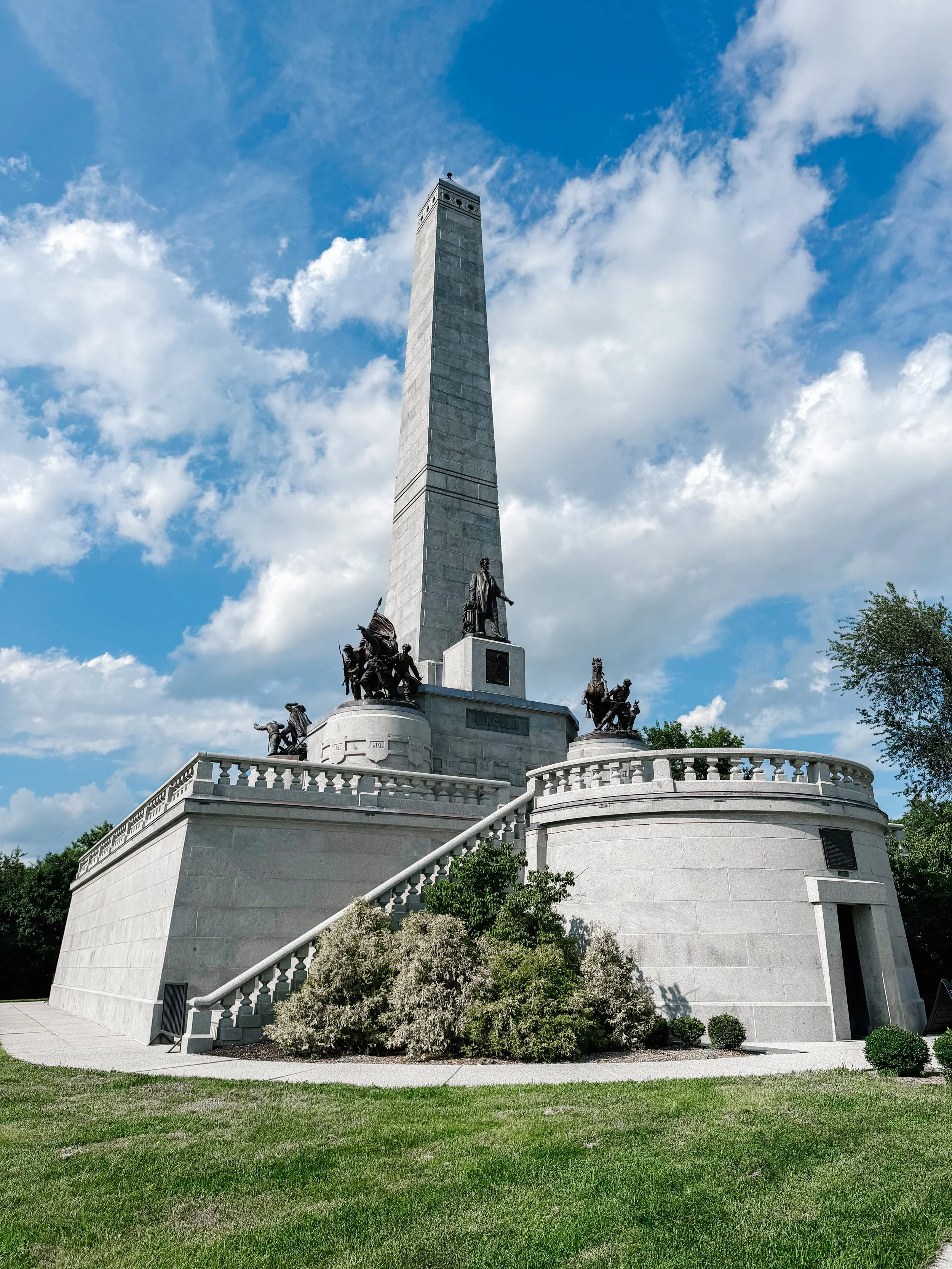
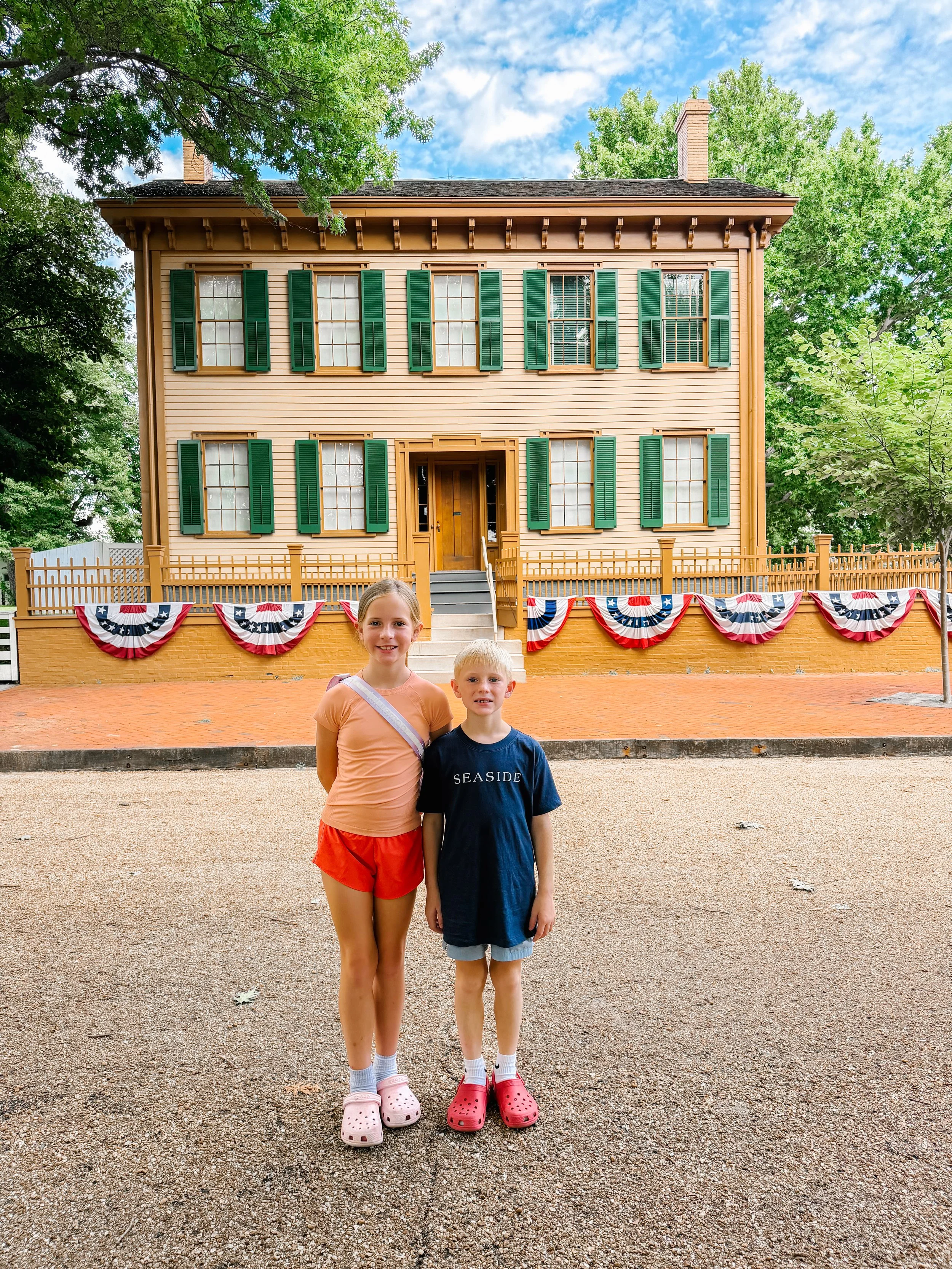
On one of our Midwest road trips, my daughter really wanted to stop in Springfield, Illinois, to see Abraham Lincoln's home. It wasn't necessarily something I would have built the entire route around on my own, but it was important to her, so we made it happen. And it ended up being one of my favorite stops of the entire trip.
That's one reason I think it's so important to let the kids have some ownership over the itinerary. When there's something on the trip that they picked, they're invested in the adventure too.
6. Build the Route in a Way That Actually Makes Sense
Now I start connecting everything.
One of my biggest road-trip pet peeves is unnecessary backtracking. I don't want to drive 30 minutes east to see something, turn around and drive an hour west, and then head east again later that afternoon. So I start mapping our stops based on the direction we're already traveling.
This is also where some things inevitably get cut. A stop might sound amazing, but if it adds two hours of driving in the wrong direction, it may not be worth it. Once I have the order figured out, I start estimating how much time we'll need at each place.
What time would we like to arrive?
How long do we realistically need there?
What time should we leave?
And where does that put us for our next stop?
I don't plan our vacations down to the minute, but having approximate times helps me see whether the day I've created is actually possible.
7. Be Realistic About Driving Time
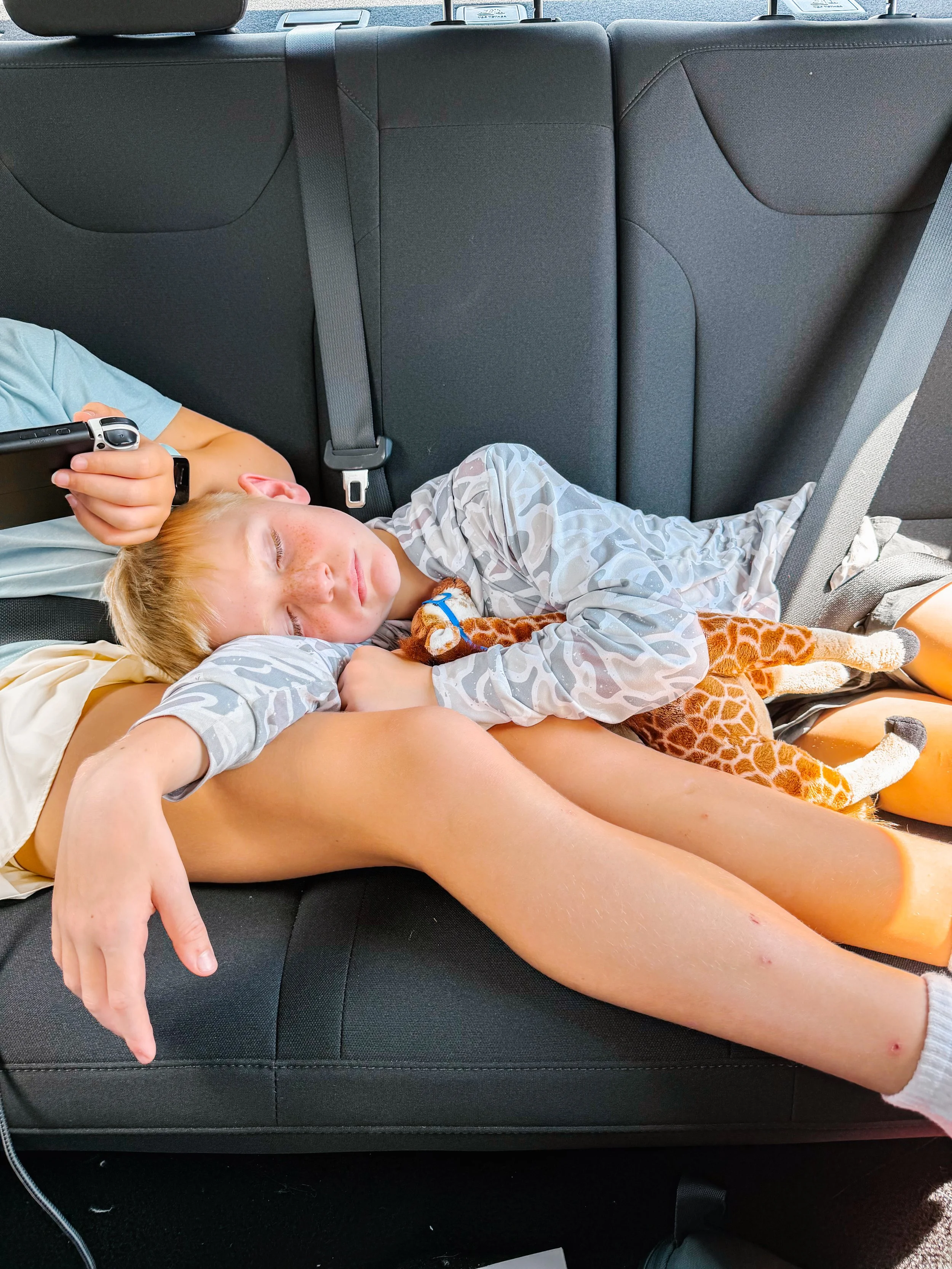
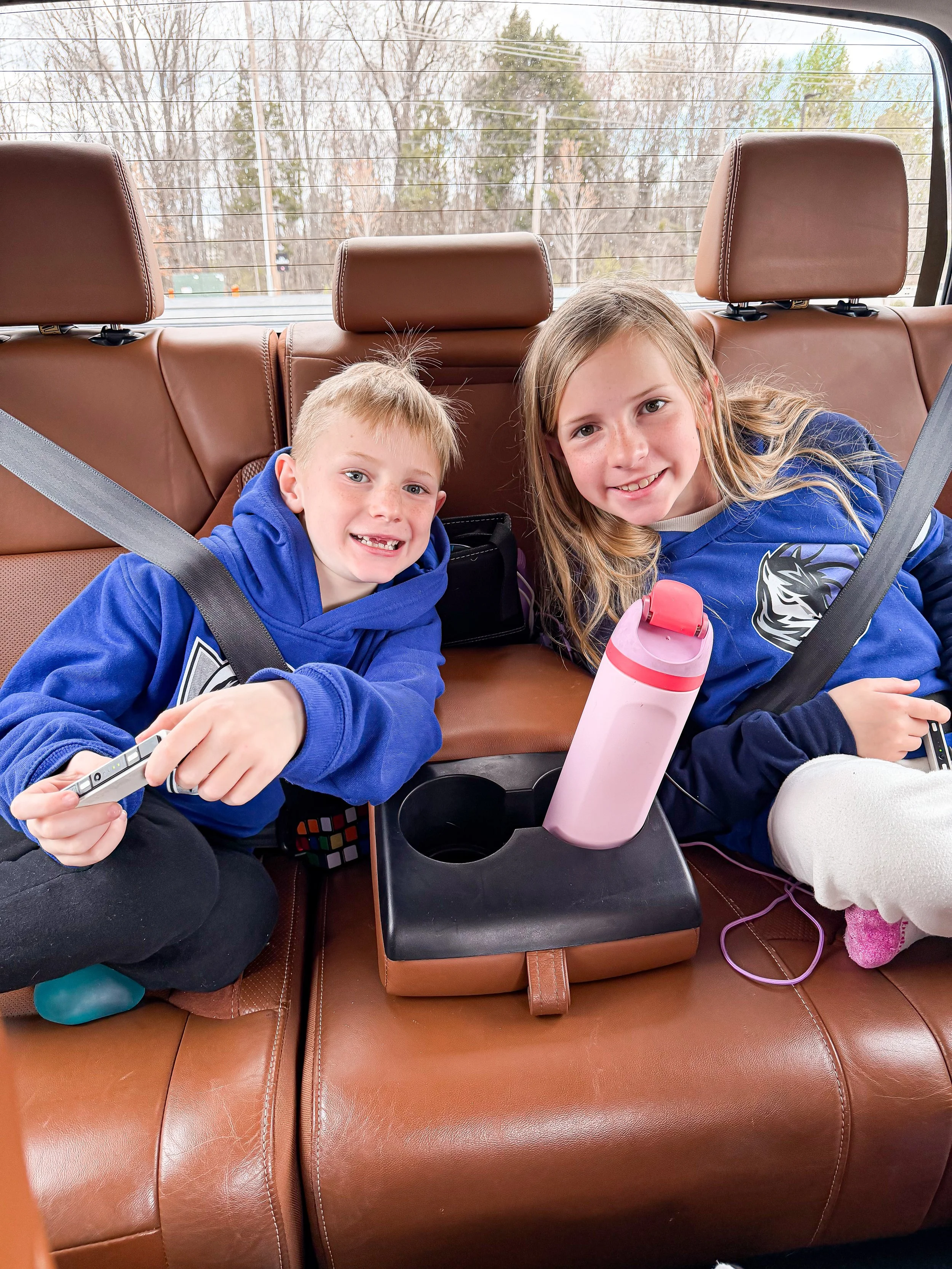
This might be one of the most important parts of planning a road trip with kids. The drive time on Google Maps is not necessarily your family's drive time. A four-hour drive doesn't account for someone needing to use the bathroom. Or stopping for gas. Or getting lunch. Or someone needing to use the bathroom again 20 minutes after you just stopped. When I'm mapping out our driving days, I build in time for real life.
I also think about what we're doing before and after the drive. A five-hour drive first thing in the morning might be completely manageable for us. A five-hour drive after spending six hours hiking and exploring? That's a different story.
Sometimes I'll look at a stretch of the trip and realize that yes, technically we could make the drive. But do we want to?
Sometimes the answer is no. And sometimes paying for an extra hotel night halfway between two destinations is absolutely worth it for our family's sanity.
8. Book Accommodations Based on How We'll Actually Use Them
Once the route is mapped out and I feel good about the timing, then I start looking at accommodations. And I don't look for the same kind of hotel at every stop. If we're arriving late, sleeping, and getting back on the road first thing the next morning, that hotel is really just a place to rest our heads. For those nights, I'm usually looking for something clean, comfortable, conveniently located along our route, and preferably with breakfast included. Breakfast at the hotel means one less stop in the morning and makes it much easier to get everyone fed and back on the road.
But if we're staying somewhere for several nights, my priorities change. Then I might look for a larger room, a pool, a great location, or other amenities that make it somewhere we'll actually enjoy spending time. The hotel should match the purpose of that particular stop.
9. Do One Final Balance Check
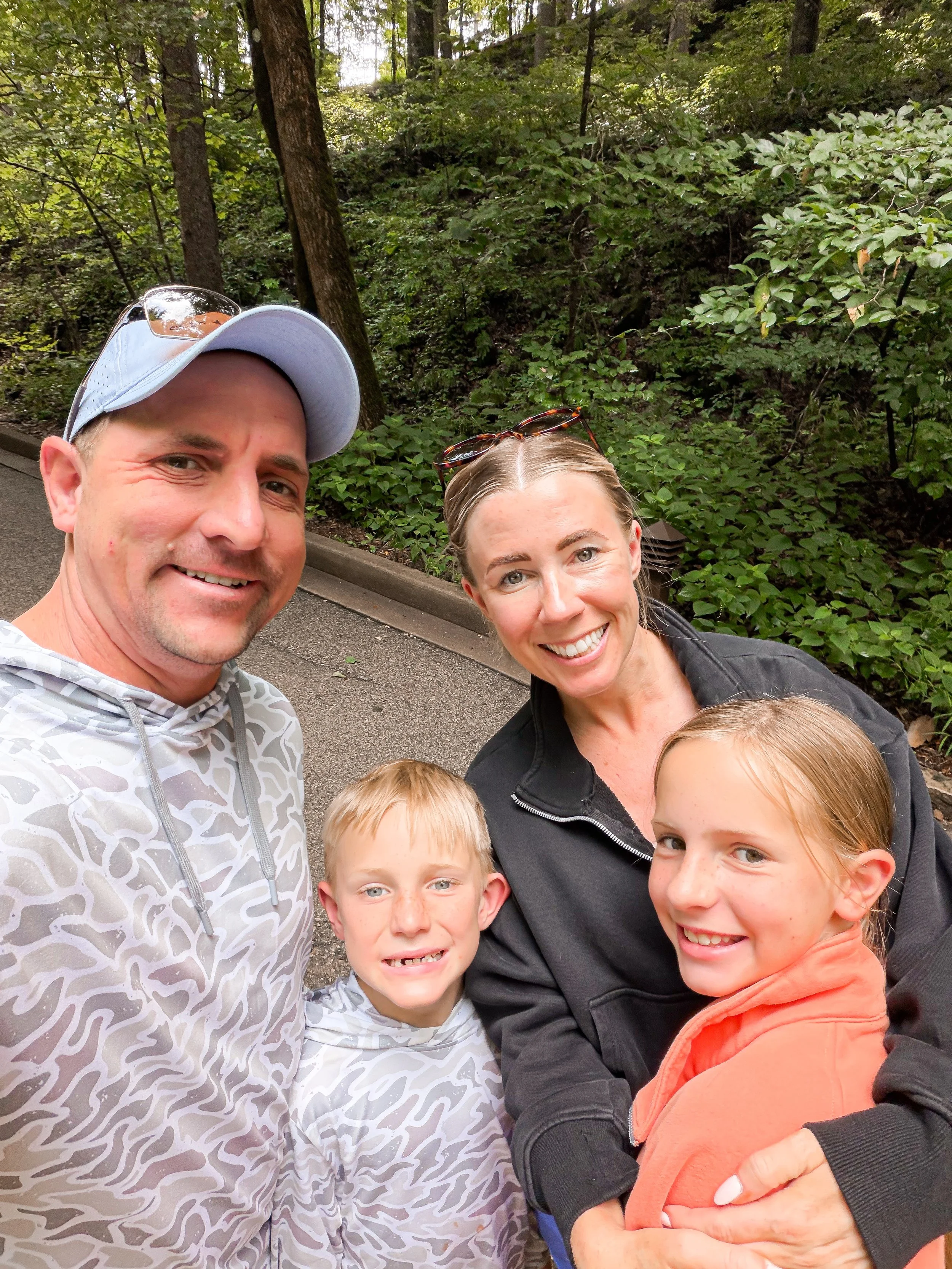
Before I book everything, I take one final look at the trip as a whole. This is usually when I ask myself whether the road trip we've created actually feels like a vacation, or if I've gotten a little too excited and tried to squeeze in way too much.
I look at how much time we're spending exploring compared to driving, how often we're changing hotels, and whether I've left enough breathing room between the bigger days. Most importantly, I think about the kids. Are they going to enjoy what we have planned? Is there something on the itinerary for everyone? Are we giving ourselves opportunities to slow down and actually enjoy where we are?
We've learned that every day doesn't need to be jam-packed from morning until night. Sometimes an afternoon at the hotel pool is exactly what everyone needs. Sometimes it's grabbing an early dinner and heading back to the room. And sometimes it's realizing that one more stop simply isn't worth pushing everyone past their limit.
I'd much rather take something off the itinerary and have our family genuinely enjoy the places we do visit than spend the entire trip rushing from one thing to the next. The goal isn't to see everything. It's to create a road trip that feels like an adventure anda vacation.
10. And Then...Be Willing to Throw the Plan Out the Window
Okay, maybe not the whole plan. I spend a lot of time creating our road-trip itineraries because having a plan makes the trip run so much smoother. But I also go into every road trip knowing something will change.
Weather happens.
Traffic happens.
Someone sleeps later than expected.
A hike takes twice as long because we're having a great time.
The kids are exhausted.
We find somewhere we absolutely love and decide we'd rather stay another hour. Or something we thought would be amazing ends up being a quick stop and we're ready to move on. That's okay.The itinerary is there to guide our trip, not control it.
I think one of the biggest secrets to enjoying a road trip with kids is being willing to adjust when the trip actually starts. Because ultimately, the goal isn't to follow the itinerary perfectly. The goal is to enjoy traveling together.
The Best Road Trips Leave Room for the Unexpected
Some of my favorite memories from our family road trips haven't necessarily come from the biggest attractions. They've come from the places we almost didn't stop.
The little towns we wandered through.
The scenic overlooks we pulled into.
The places the kids asked to visit.
The random roadside discoveries.
And the moments we never could have planned for.
That's why I love road trips so much. You can plan the route. You can research the stops. You can calculate the drive times and book the hotels. But you still have to leave a little room for the adventure to happen.
Start with a map. Make a plan. Build in breathing room. And then be willing to change it.
Because the best family road trip isn't necessarily the one where you see the most. It's the one your family is still talking about years later.
Need Help Planning Your Family Road Trip?
If reading all of this made you excited about taking a road trip, but slightly overwhelmed by everything that goes into planning one that's exactly where Memories for Miles Travel can help.
We love taking all those places you want to see and turning them into a route that actually makes sense for your family. From accommodations and driving logistics to family-friendly activities, national parks, unique stops, and those little places you might never find on your own, we can help put the pieces together.
You bring us the places you've been dreaming about.
We'll help you figure out the miles in between.